


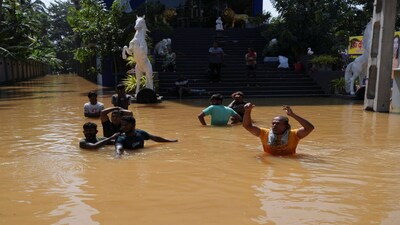
Cyclone Ditwah continued to bring rain and strong winds across Tamil Nadu and neighbouring regions on Sunday (November 30), with the weather office warning that the system is expected to move parallel to the northern Tamil Nadu and Puducherry coastline over the next 24 hours. The storm has already caused deaths, damaged crops and homes, and forced thousands into relief camps in India and Sri Lanka. (Image: Reuters)
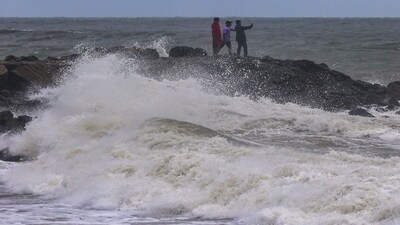
Three deaths reported in Tamil Nadu | At least three people have died in Tamil Nadu due to rain-related incidents, the PTI reported. Two people were killed when walls collapsed in Tuticorin and Thanjavur, while a 20-year-old youth died of electrocution in Mayiladuthurai, as confirmed by the state’s Disaster Management Minister. (Image: PTI)
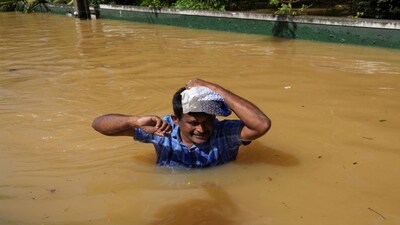
Over 1.53 lakh deaths reported in Sri Lanka | Sri Lanka has been the worst affected. According to Reuters, at least 153 people have died due to landslides and floods triggered by the cyclone. Another 191 people are missing, while more than 5 lakh people have been impacted across the country. (Image: Reuters)

Farming belt in Tamil Nadu hit hard | In Tamil Nadu’s Cauvery delta region, around 57,000 hectares of farmland have been submerged. Districts such as Nagapattinam, Thiruvarur and Mayiladuthurai reported major crop damage. Farmers also said that nearly one lakh acres of standing paddy crops were under water in several delta areas, the PTI reported. (Image: PTI)
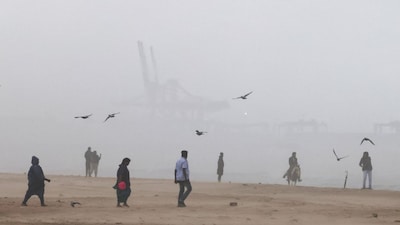
Cattle deaths and the use of drones | The cyclone also led to the death of at least 149 cattle in Tamil Nadu. To track losses and assess damage, drones were used in flood-hit districts to survey farmland, houses and animal shelters, according to the state government. (Image: Reuters)
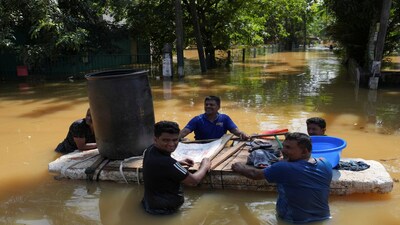
Homes damaged, thousands moved to safety | Around 234 huts were damaged in Tamil Nadu’s delta districts. In Sri Lanka, more than 78,000 people were shifted to nearly 800 relief centres, many of them in schools. Rescue teams are providing food, water and basic medicines in affected villages, Reuters reported. (Image: Reuters)
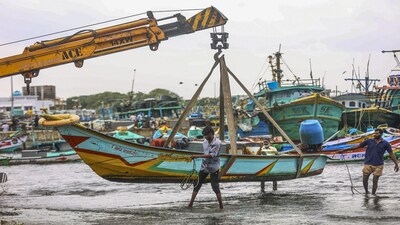
Flights, trains and fishing disrupted | In Chennai, about 54 flights were cancelled due to strong winds and rainfall. Parts of the Southern Railway services were also stopped temporarily. Fishermen in Tamil Nadu and Puducherry were advised not to go into the sea due to rough conditions. (Image: PTI)
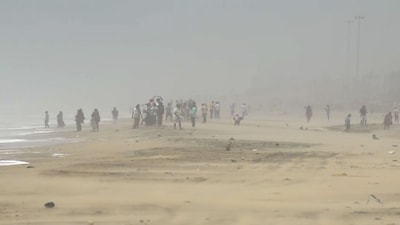
Reservoirs opened, water released into sea | To prevent flood risk in Chennai, water was released from Chembarambakkam and Poondi reservoirs as a precaution. Officials said the move was made to protect dams and avoid further waterlogging in the city. (Image: PTI)
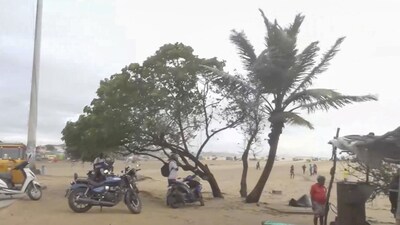
Strong winds and rough seas along the coast | Cyclone Ditwah caused surface winds of 60–70 kmph, with gusts reaching up to 80 kmph in coastal districts of Tamil Nadu and Puducherry. Sea conditions turned rough, damaging fishing boats in areas like Mandapam and causing coastal erosion. (Image: PTI)
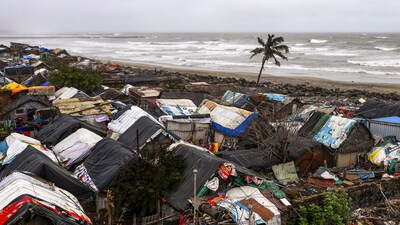
Rescue teams on high alert | Tamil Nadu has deployed 28 disaster response teams, including NDRF and SDRF units. An additional 10 teams from other states were flown in. The Air Force and Coast Guard were also kept on standby to assist in emergency operations. (Image: PTI)
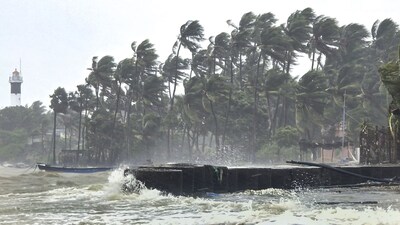
More rain expected, situation still risky | According to weather authorities, the cyclone is expected to weaken into a depression but continue bringing heavy rainfall in parts of Tamil Nadu, Puducherry and Sri Lanka. Officials have warned that flooding may worsen in low-lying areas, especially near river banks. (Image: PTI)